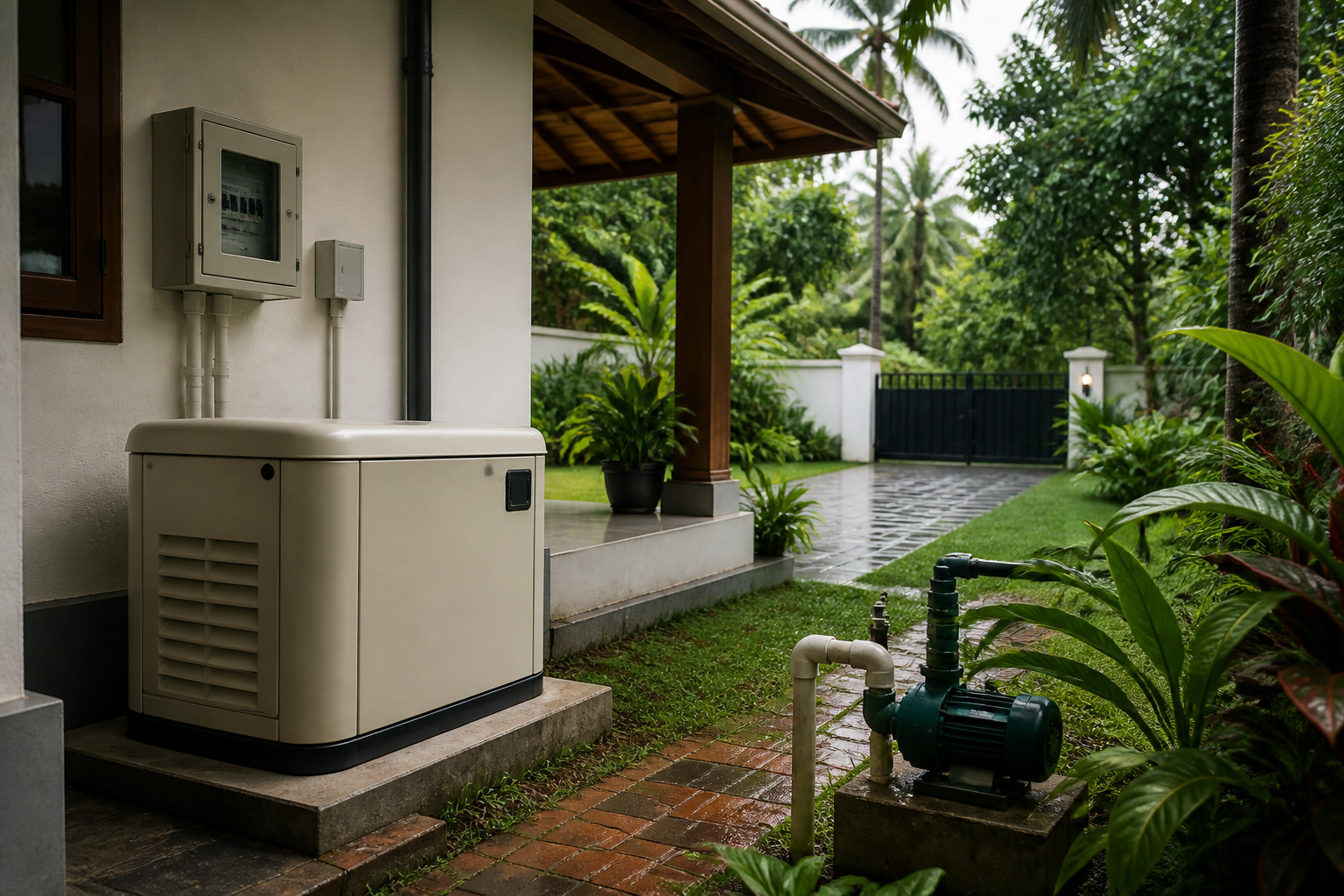
If you are going away for a long time, the safest approach is to prepare generators, water pumps and other household equipment before you leave, not after you return. A short shutdown and inspection routine can reduce the risk of battery drain, rust, water leakage, fuel issues and electrical faults.
This is especially useful for homeowners, NRIs, families in transit, and small businesses that close up for a season. The goal is simple: keep everything clean, isolated, documented and ready to restart without stress.
What should be done before locking up the property?
Start with the equipment that can cause the most damage if it fails silently. In many Indian homes, that means the generator, water pump, inverter room, geyser area, outdoor AC unit, and any equipment used for security or maintenance.
Generator care during long absences
- Check the fuel status and follow the manufacturer’s advice for storage. If the unit will not be used for a long period, ask a qualified technician whether fuel should be drained or treated.
- Inspect battery condition. A weak battery often causes trouble at restart, especially after weeks of inactivity.
- Keep the area dry and ventilated. Moisture can corrode terminals and fittings.
- Switch off the supply correctly if the installation has an isolation arrangement and the manufacturer recommends it.
- Record the last service date and any open issues.
Pump and water system care
- Turn off the main water supply if the property will be empty and the plumbing setup allows it.
- Check for slow leaks near the pump, valves, overhead tank and bathroom lines.
- Empty or secure exposed pipes if your plumber recommends it for the local climate or plumbing design.
- Ensure the pump controller is protected from moisture, rodents and loose wiring.
- Test the pump once before leaving so you know it starts and stops normally.
Other household equipment to look after
- Inverter and batteries: clean dust, check electrolyte level only if the battery type requires it, and confirm proper ventilation.
- Refrigerator: empty perishables, defrost if needed, clean the interior and leave the door slightly open if it will remain unplugged.
- Washing machine: drain water, clean the filter and keep the drum dry.
- AC units: clean filters and confirm outdoor units are not blocked.
- CCTV, routers and smart devices: verify backup power and internet reliability if you depend on them for security.
A practical pre-departure checklist
Use this list a few days before you leave so there is time to fix anything that looks doubtful.
| Task | Why it matters | Who should do it |
|---|---|---|
| Check generator fuel, battery and casing | Reduces starting issues and corrosion | Owner or service technician |
| Inspect pump, tank and visible pipes | Helps prevent leaks and water damage | Owner with plumber support if needed |
| Unplug non-essential appliances | Protects against standby drain and surges | Owner or caretaker |
| Label isolation switches and circuit breakers | Makes restart safer and clearer | Qualified electrician |
| Share a contact list with caretaker | Speeds up response if something goes wrong | Owner |
| Arrange periodic inspections | Keeps equipment from sitting unattended for too long | Property manager or trusted service provider |
Common mistakes people make
- Leaving fuel or water issues unresolved. Small leaks become bigger problems when nobody is around to notice them.
- Switching off everything without a plan. Some devices need a controlled shutdown, not a sudden one.
- Ignoring battery care. Batteries can weaken quietly during long idle periods.
- Forgetting ventilation. Enclosed equipment rooms can trap heat and moisture.
- Not telling a trusted person where switches and valves are located. In an emergency, delay makes damage worse.
- Trying risky fixes by yourself. Electrical panels, fuel systems and pressurised plumbing deserve caution.
When should you call a qualified professional?
Call a qualified electrician, plumber, generator technician or appliance service professional if you notice any of the following:
- Burning smell, sparking, tripped breakers or loose electrical connections
- Fuel smell, unusual smoke, oil seepage or hard starting in the generator
- Persistent pump noise, low pressure, repeated motor cut-off or visible leakage
- Corroded terminals, swollen batteries or damaged wiring
- Any issue involving gas, fire risk, structural damage or water entering electrical parts
For safety, avoid opening electrical panels, altering wiring, or handling generator and pump internals unless you are trained and authorised to do so.
How property owners can manage long absences better
If you are away often, create a simple maintenance routine instead of relying on memory. Keep one file with equipment manuals, service dates, warranty details and contact numbers. Ask your caretaker to send a photo report after each visit: generator area, pump area, visible leaks, panel status and any unusual sound or smell.
For homes that remain empty for months, a managed upkeep plan can be much easier than ad hoc calls. You can explore Managed services if you want routine support, inspections and follow-ups arranged in one place. If you are setting up the first handover or need a tailored visit plan, Ask Karyasthan.
FAQ
Should I run the generator before leaving?
Yes, if it is safe and part of the normal maintenance routine. A short test run helps confirm that it starts properly. If the unit has a specific shutdown or storage procedure, follow the manufacturer’s guidance or ask a technician.
Can I keep the pump switched on while I am away?
Only if your water system is monitored and designed for that. In many homes, it is safer to turn off the water supply and isolate the pump to reduce leakage and dry-run risks.
What about appliances left on standby?
Unplug non-essential appliances wherever practical. This reduces power draw and lowers the chance of damage from surges or faults during an empty-house period.
How often should someone check the property?
It depends on the equipment, weather and occupancy risk. Some homes may need weekly checks; others may manage with less frequent visits. A caretaker or service provider can help you set the right schedule.
What is the safest way to restart after a long gap?
Restart one system at a time, inspect for leaks or abnormal sounds, and test essential equipment first. If anything looks uncertain, get professional help rather than forcing it.
Final thought
Long absences do not have to mean equipment trouble. With a short checklist, a few good habits and reliable support, you can protect your generator, pump and household appliances until you return. If you would like help planning visits, inspections or a property care routine, Contact the team or onboard a service with Karyasthan.



0 Comment