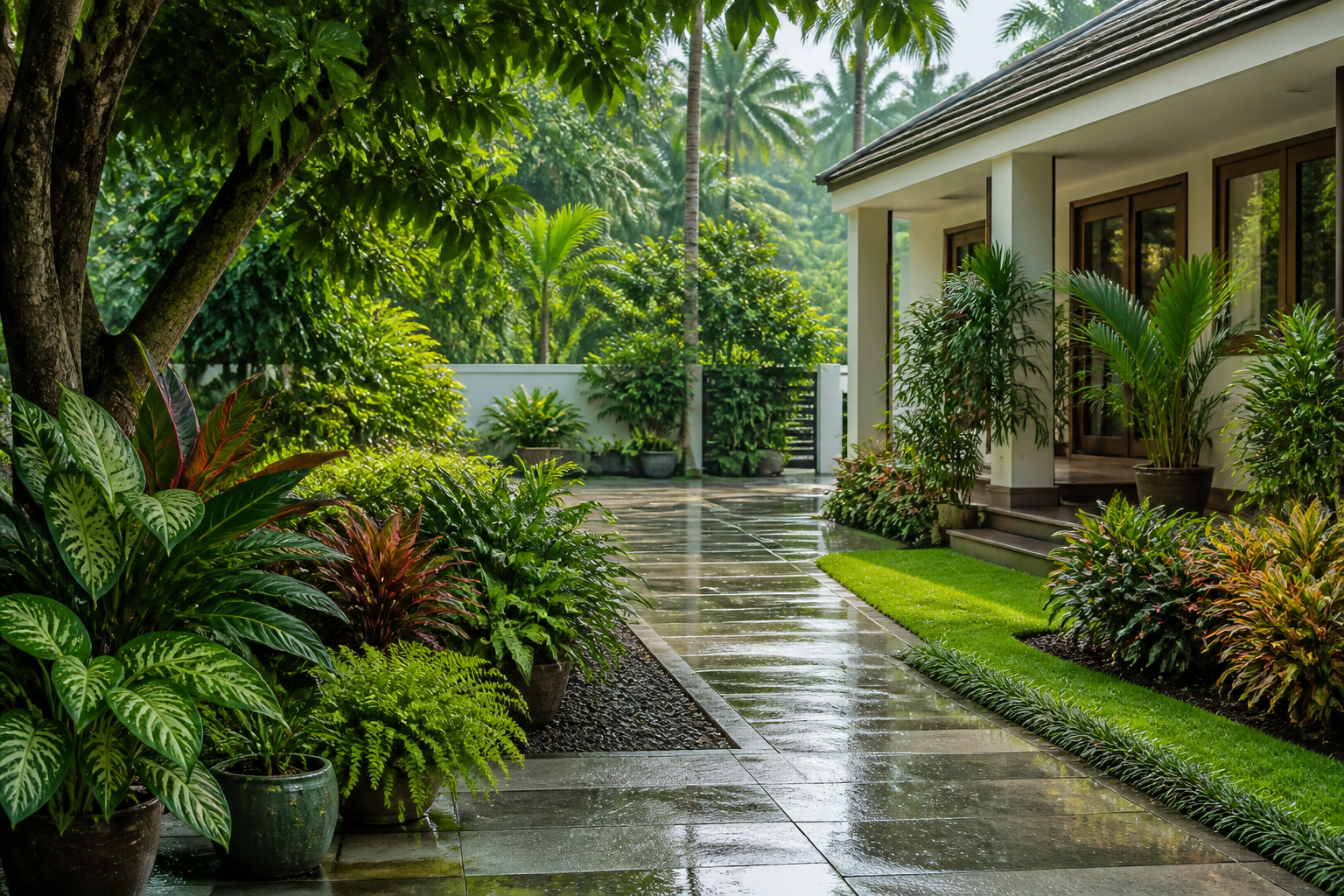
The right plant choice starts with your space, not with the nursery. If a plant gets the wrong amount of sunlight or too much rain exposure, it will struggle no matter how good the soil or pot looks. For Kerala homes, apartments, villas, terraces, courtyards, and shopfronts, the best results come from matching the plant to three things: sunlight, shade, and monsoon conditions.
Use this simple rule: observe your space first, then choose the plant. A sunny terrace, a partially shaded balcony, and a rain-heavy courtyard each need different plant types. If you are managing a home from abroad or handling a property with limited time, thoughtful selection also reduces daily maintenance and replacement costs. If you want help planning the full setup, you can Ask Karyasthan for a practical start.
Start by checking your actual light conditions
Do not guess. Watch the space at different times of the day. Morning light, afternoon heat, and full shade behave very differently.
1. Full sun areas
These are spots that receive strong sunlight for most of the day, such as open terraces, south-facing courtyards, rooftops, and boundary edges with no cover. Plants here must tolerate heat and drying soil.
2. Partial shade areas
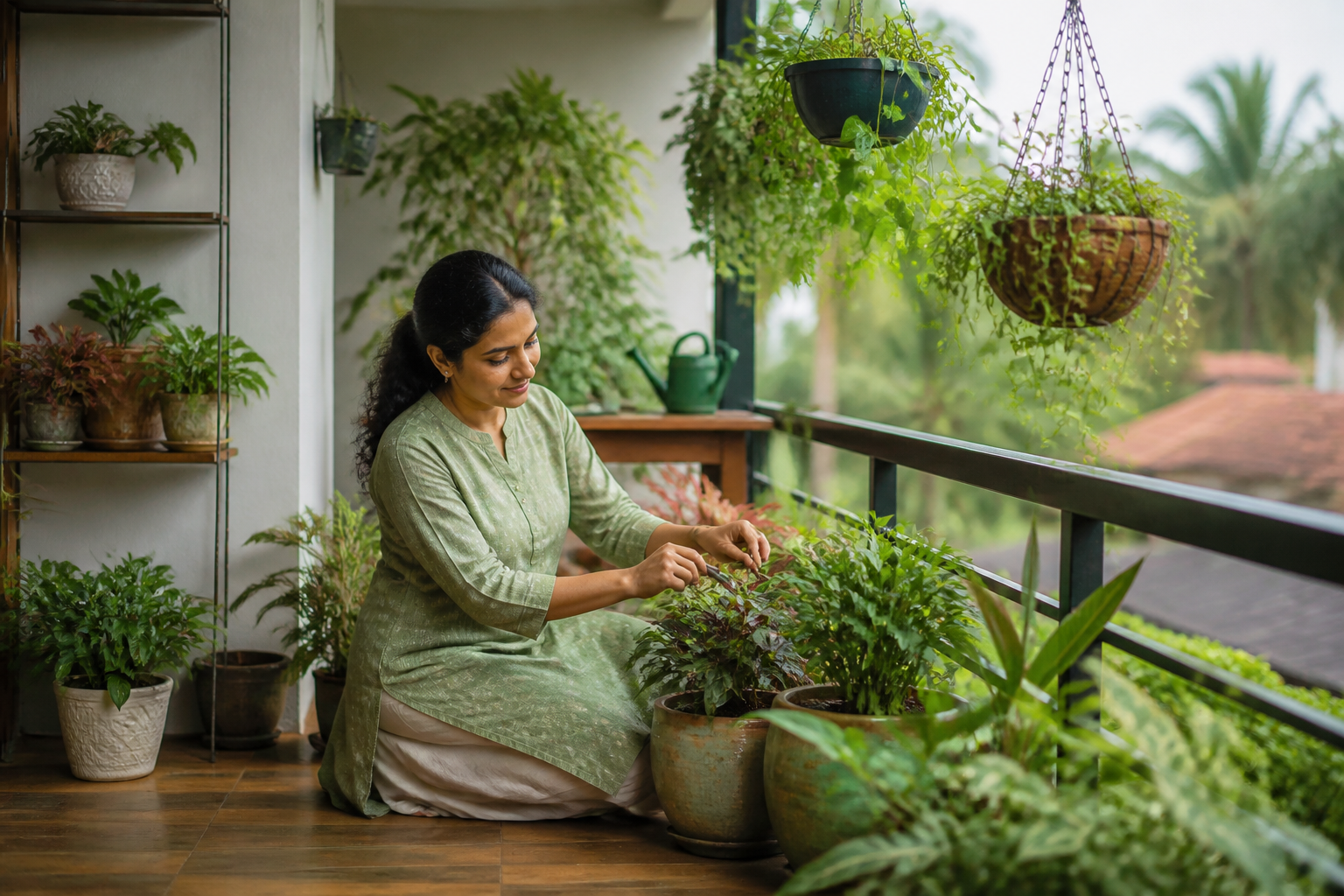
These spaces get a few hours of sun or bright indirect light, such as balconies with grills, under stair spaces, verandas, or areas partly covered by trees or roofing.
3. Deep shade areas
These are corners with very little direct sunlight, such as covered entrances, north-facing walls, or spaces under dense tree cover. Not every plant survives here, so selection matters even more.
Choose plants based on the space and weather
Kerala’s climate can be generous to plants, but monsoon moisture, humidity, and poor drainage can also create problems. The best plant is one that suits both light and water conditions.
| Space type | Best plant traits | Examples of suitable choices |
|---|---|---|
| Full sun terrace or rooftop | Heat-tolerant, sturdy leaves, manageable water needs | Hibiscus, bougainvillea, adenium, jasmine, areca palm in bright areas |
| Partial shade balcony | Bright light lovers, compact growth, good container performance | Money plant, peace lily, anthurium, ferns, croton, dracaena |
| Deep shade entrance or wall | Low-light tolerance, humidity-friendly, slow to moderate growth | Snake plant, ZZ plant, philodendron, some palms, certain ferns |
| Monsoon-exposed garden bed | Drainage-friendly roots, disease resistance, less waterlogging risk | Ginger lily, ixora, heliconia in suitable spots, marigold in open sunny beds |
For larger homes, villas, offices, or rental properties, the easiest option is to divide the property into plant zones before buying. This avoids the common mistake of placing all plants in one category. If you need ongoing care, planning, and upkeep for multiple areas, see Managed services.
A practical checklist before you buy any plant
Use this checklist while visiting a nursery or selecting plants online:
- Check sunlight: Know whether the spot gets full sun, partial shade, or deep shade.
- Check rain exposure: Will the plant receive direct monsoon rain or stay protected under a roof?
- Check drainage: Make sure pots and beds do not hold standing water.
- Check space: Estimate how wide and tall the plant may grow.
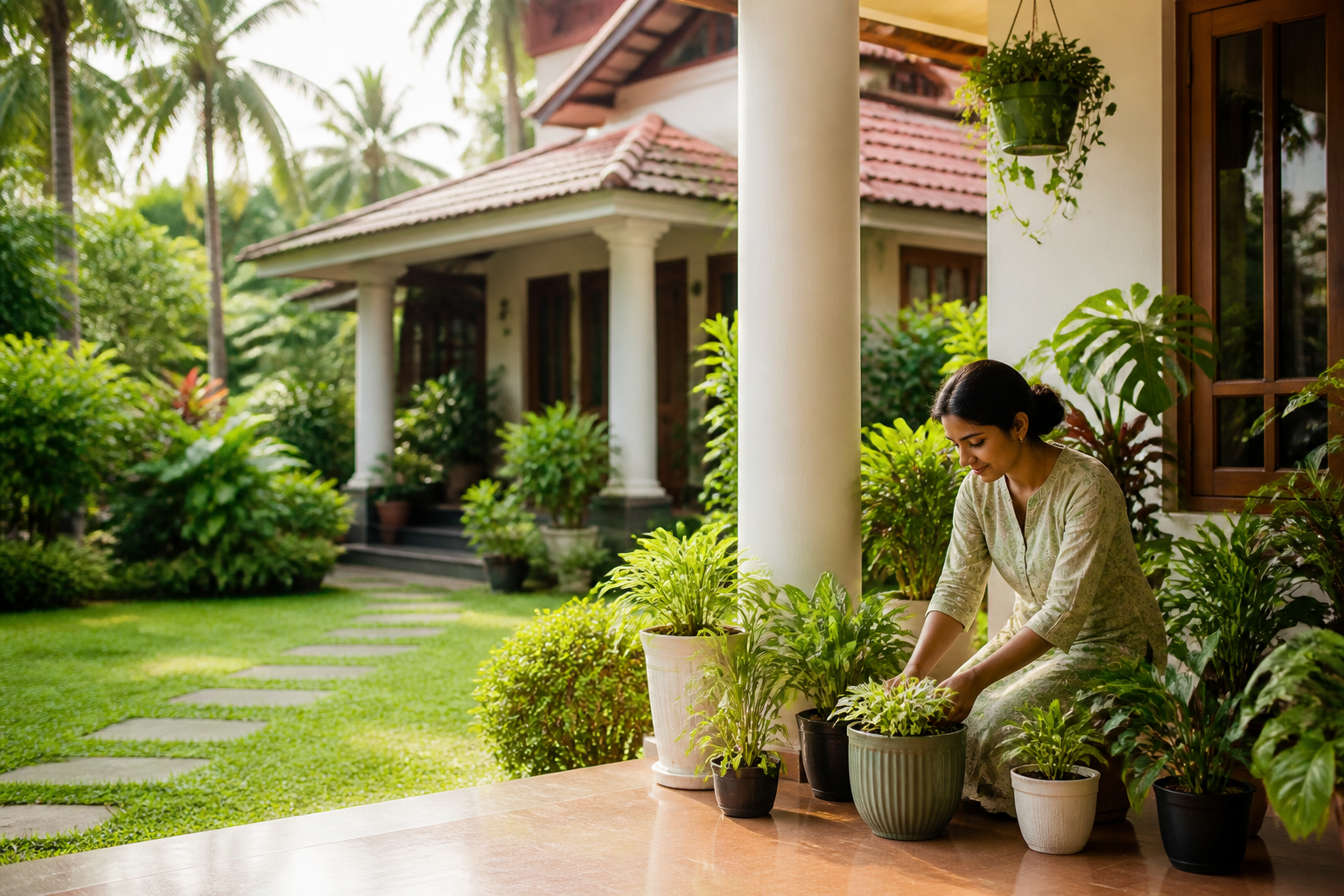
- Check maintenance time: Choose low-maintenance plants if the property is not visited often.
- Check soil or pot mix: Use a mix that supports airflow and does not become compacted.
- Check wind: On terraces and upper floors, select sturdy plants that can handle breezes.
- Check purpose: Do you want privacy, colour, indoor freshness, or outdoor landscape appeal?
Common mistakes people make
- Buying for looks only: A pretty plant may fail if the light is wrong.
- Overwatering in monsoon: Many plants suffer more from excess water than from lack of attention.
- Ignoring drainage holes: Pots without drainage can quickly damage roots.
- Placing shade plants in harsh sun: Leaves can scorch and drop early.
- Using very heavy soil in containers: This can trap water and suffocate roots.
- Buying plants that outgrow the area: Small balconies need compact varieties.
- Not planning for travel or absentee care: If you are an NRI or frequent traveller, choose resilient plants or arrange routine care.
How monsoon changes plant selection in Kerala
In Kerala, the monsoon is not just a season; it is a major design factor. Heavy rain and high humidity can help many plants grow well, but they can also trigger root rot, fungus, and pest issues when drainage is poor. That is why monsoon-friendly plant choice should focus on roots as much as leaves.
Look for plants that do well in humid weather and avoid placing delicate varieties in spots where water collects. Raised planters, well-drained beds, and pots with proper holes make a big difference. For terrace gardens, check that water does not stay trapped near the base of pots. For ground planting, confirm that the area does not flood after a heavy shower.
When to call a qualified professional
Some plant-related issues are simple, but others need professional help. Call a qualified gardener, landscape worker, or property care team when:
- you need large-scale planting for a villa, apartment common area, office, or storefront;
- the terrace or balcony needs drainage changes before gardening;
- you see repeated root rot, fungus, or pest damage across multiple plants;
- the area is difficult to access and requires safe setup;
- you want trees or large shrubs placed near structures, compound walls, or paving;
- the property is vacant, rented out, or managed remotely.
For anything involving structural load, waterproofing, electrical fixtures near water, or major terrace modifications, use a qualified professional. Plant selection should not create hidden risks for the building.
A simple way to decide: match plant type to location
Think in three layers:
- Sun: Choose plants that can handle heat and direct light.
- Shade: Choose plants that stay healthy in lower light and indoor-like conditions.
- Monsoon: Choose plants that tolerate humidity and drainage changes.
When all three match, the plant settles faster, needs less replacement, and looks healthier through the year. This approach also makes properties easier to maintain for families, NRIs, and business owners who want a neat, welcoming space without constant rework.
FAQ
Which plants are best for a sunny terrace in Kerala?
Choose sturdy, heat-tolerant plants that can cope with strong light and occasional drying between watering. Also make sure the pots have proper drainage.
What plants work well in partial shade balconies?
Plants that prefer bright indirect light often do well in balconies with filtered sun. Many compact foliage plants and some flowering varieties suit this setting.
Can I keep indoor-style plants outdoors during the monsoon?
Only if the spot is protected from heavy rain and has good airflow and drainage. Otherwise, they may suffer from excess moisture.
How do I reduce maintenance if I visit the property only occasionally?
Choose hardy plants, avoid high-water-demand species, use quality potting mix, and arrange periodic maintenance. If needed, a managed care plan can handle watering, trimming, and replacement support.
What is the first step before buying plants?
Observe the location for sunlight, shade, wind, and rain exposure. Then choose the plant based on that real condition, not on appearance alone.
If you want practical help choosing plants for your home, rental property, office, or outdoor space, Contact the team and ask for a site-based recommendation. A little planning now can save time, effort, and unnecessary plant replacement later.
0 Comment