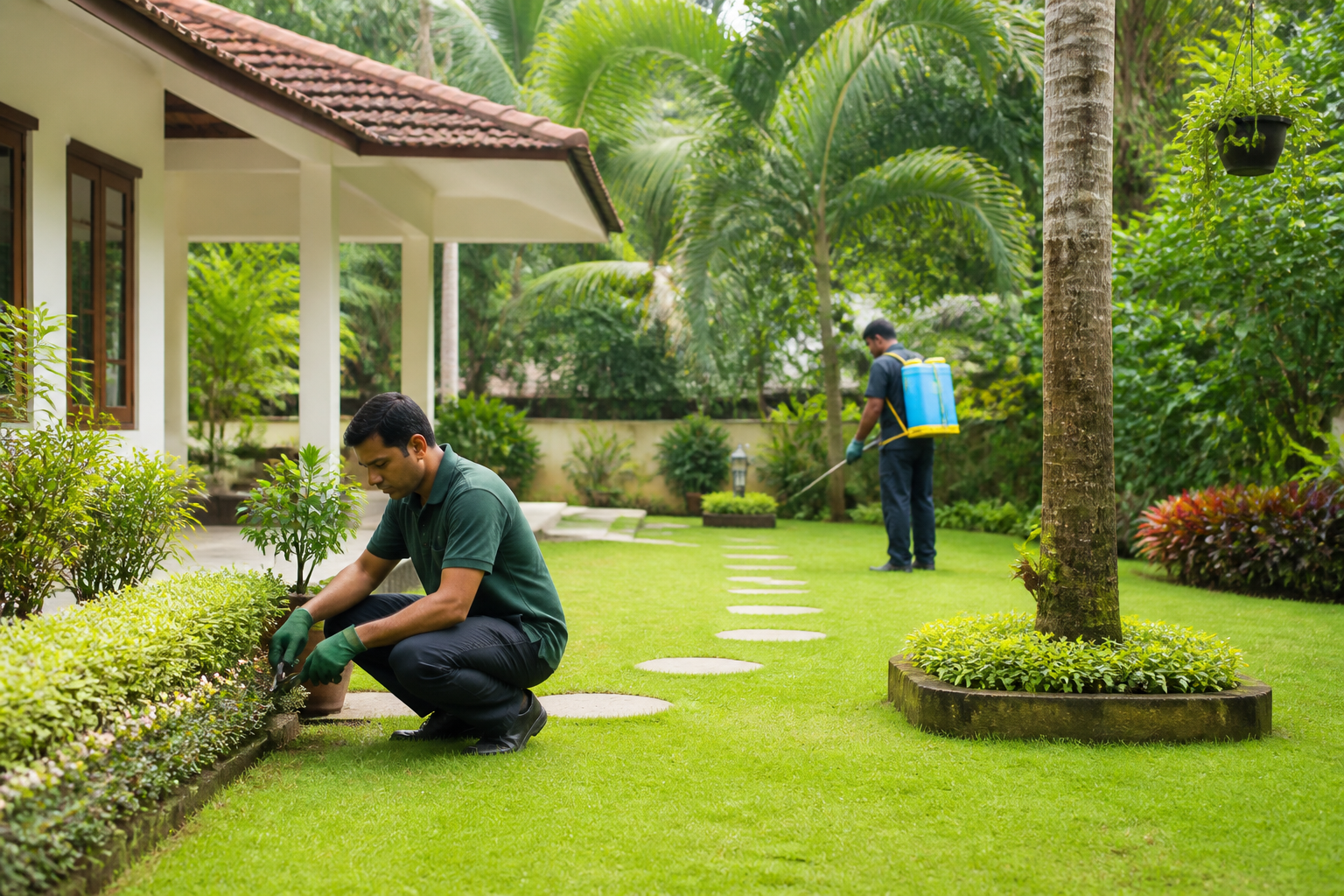
The best way to prevent garden pests is to keep plants healthy, remove breeding spots, and change your garden care with the season. A tidy, well-watered, well-pruned garden is far less inviting to ants, mosquitoes, aphids, mealybugs, snails, termites, and rodents than one with standing water, dead leaves, or crowded plants.
For homeowners, families, NRIs managing property remotely, and small businesses with lawns or planter spaces, seasonal care is not only about appearance. It helps protect plants, reduce nuisance insects, and avoid bigger maintenance issues later. If you want regular help with property upkeep, you can also Ask Karyasthan or explore Managed services.
What to do first: the simple pest-prevention method
Start with three basics: clean up, observe, and adjust.
- Clean up: Remove fallen leaves, rotting fruit, and weeds where pests hide.
- Observe: Check the underside of leaves, stems, and soil surface for early signs of insects or eggs.
- Adjust: Water correctly, space plants properly, and prune for airflow.
This approach works because pests usually target weak, crowded, or damp areas. Healthy plants recover faster and attract fewer problems.
Seasonal garden care by time of year
Indian weather patterns vary by region, but the same broad seasonal habits apply. Use the season to guide watering, pruning, and pest checks.
Before and during the hot season
- Water early in the morning so plants can absorb moisture before peak heat.
- Mulch lightly to reduce soil drying, but keep mulch away from plant stems.
- Watch for spider mites, aphids, and whiteflies on stressed plants.
- Move pots with severe afternoon sun to partial shade if possible.
During the monsoon
- Improve drainage around pots, beds, and walkways to avoid standing water.
- Remove soggy leaves and prune dense growth to improve airflow.
- Inspect for snails, slugs, fungus spots, and mosquito breeding near containers.
- Empty trays, buckets, coconut shells, and unused containers that collect rainwater.
After the monsoon and in cooler months
- Trim damaged branches and clear dead plant matter.
- Check soil health and add compost only if the soil is not already overly damp.
- Look for termite activity near wooden garden furniture, edging, or stored items.
- Refresh planters and replace weak or diseased plants before problems spread.
Practical checklist for pest prevention and garden care
Use this checklist weekly or every two weeks, depending on the size of your garden:
| Task | Why it matters | How often |
|---|---|---|
| Remove dead leaves and fallen fruit | Prevents pests, mold, and ants | Weekly |
| Inspect leaf undersides | Finds early insect activity | Weekly |
| Check for standing water | Reduces mosquitoes and root issues | After rain and watering |
| Prune crowded growth | Improves airflow and lowers fungus risk | As needed |
| Clean pots, trays, and tools | Stops spread of pests and disease | Monthly |
| Use fresh, healthy soil for new planting | Gives plants a stronger start | When replanting |
Common mistakes that attract pests
Many garden pest problems begin with small habits. Avoid these common mistakes:
- Overwatering: Wet soil attracts fungus, gnats, and root damage.
- Ignoring drainage: Pots without proper drainage hold water and weaken roots.
- Leaving clutter: Cardboard, old pots, and unused containers become hiding spots.
- Dense planting: Packed plants block airflow and make it easier for pests to spread.
- Delaying inspection: Small infestations grow quickly if leaves and stems are not checked.
- Using the wrong remedy: Some pests need targeted treatment; random spraying can stress plants.
Simple care methods that help without harming the garden
Not every pest needs a harsh response. Often, better garden habits are enough. Try these safe, practical measures:
- Wash plant leaves gently with water to remove dust and small insects.
- Prune diseased or heavily infested leaves and dispose of them properly.
- Keep lawn edges neat so weeds do not become pest shelters.
- Use physical barriers such as mesh or netting where birds or larger insects are a problem.
- Store garden tools in a dry place to reduce rust and contamination.
If you manage a larger property, apartment landscape, or office frontage, a scheduled maintenance plan can save time and reduce recurring issues. You can review Managed services or Contact the team for support.
When to call a qualified professional
Some situations need expert attention, especially when safety, structure, or major infestation is involved. Call a qualified professional if you notice:
- Termites near wooden frames, sheds, pergolas, or storage areas
- Repeated mosquito breeding despite cleaning and drainage care
- Large-scale ant, rodent, or cockroach movement from garden into the home
- Fungal spread that keeps returning across multiple plants
- Electric garden lights, pumps, or outdoor wiring that may be affected by moisture
- Any structural damage, unsafe tree limb, gas line, or electrical risk near the garden
For electrical, structural, gas, fire, or major repair risks, do not try to handle the issue yourself. Use a qualified professional who can inspect the area safely and correct the root cause.
FAQ
How often should I check my garden for pests?
Check at least once a week. During monsoon or after heavy rain, inspect more often because damp conditions can speed up pest activity.
Is it better to spray first or clean first?
Clean first. Removing breeding spots, dead leaves, and excess moisture usually gives better long-term results than spraying alone.
What is the best way to prevent mosquitoes in the garden?
Remove standing water, clean trays and containers, and keep drains open. Mosquito control works best when water sources are eliminated.
Can I manage a garden from abroad?
Yes, but it helps to have someone inspect the property regularly, especially during rainy months. Remote owners often benefit from scheduled visits and clear reporting.
Do all pest problems need chemicals?
No. Many can be reduced with pruning, drainage improvement, cleaning, and better plant spacing. Use stronger treatment only when needed and preferably with professional guidance.
Final note
Healthy gardens need regular attention, not complicated fixes. With the right seasonal routine, you can reduce pests, protect plant health, and keep your property looking cared for all year. If you want dependable help with garden upkeep, property checks, or recurring care tasks, Ask Karyasthan to get started.



0 Comment