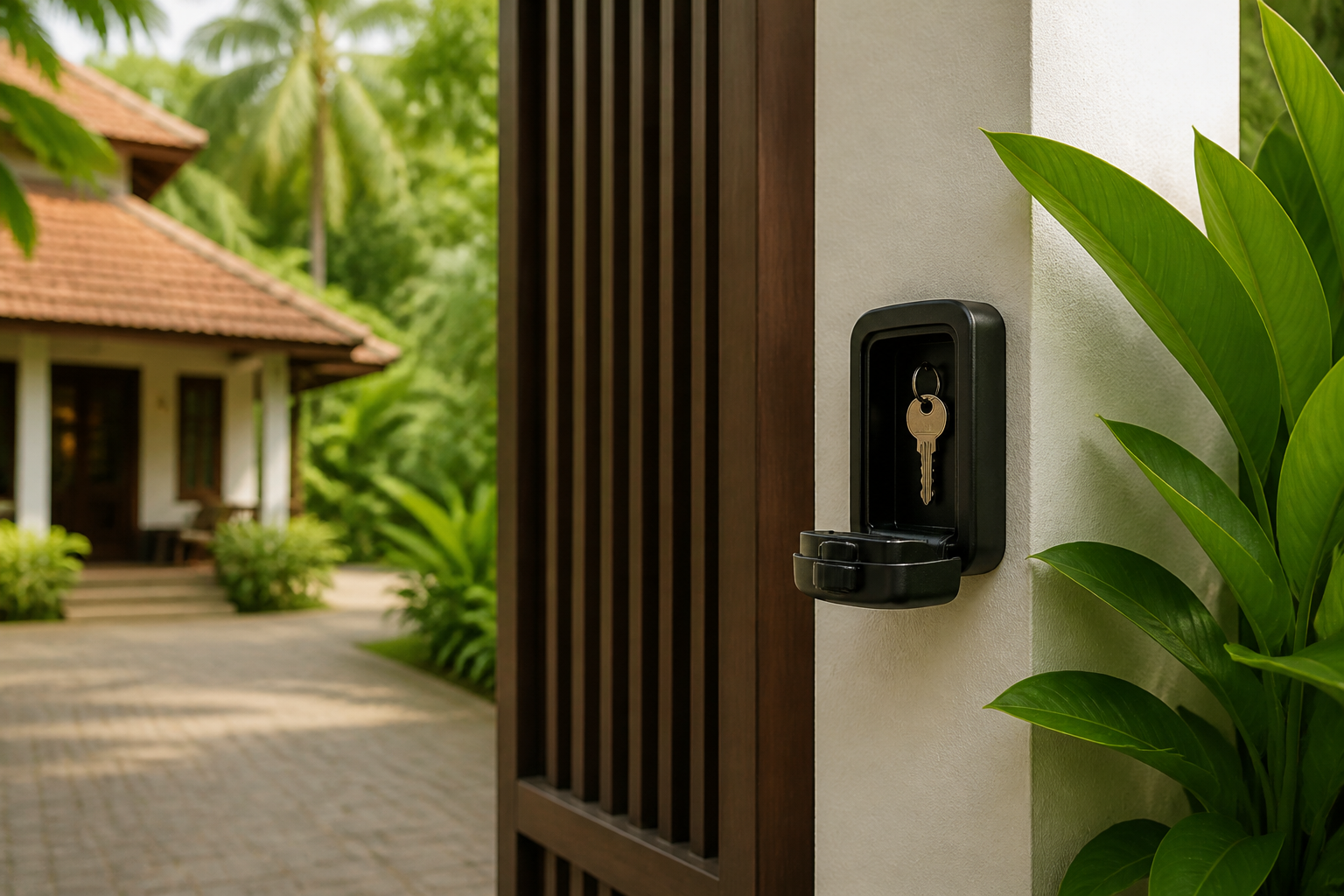
The safest way to manage spare keys, gate codes and access permissions is to keep them centralized, limited to trusted people, and logged every time they change. For a managed home, rental property or small business, the goal is simple: allow access when needed, without leaving the property open to misuse.
Why access control matters
Keys and codes often get shared during painting, cleaning, repairs, tenant move-ins, family travel, deliveries or emergency situations. Over time, access can spread across relatives, vendors, caretakers, brokers and staff. The more people who know the access details, the harder it becomes to know who can enter, when, and for what purpose.
Good access control protects your home, reduces confusion, and makes it easier to hand over responsibility when you live away from the property. This is especially useful for NRIs, busy families, apartment owners, villa owners, shop owners and office managers who rely on others for day-to-day support.
Best practices for secure spare key storage
1) Keep one master record, not many loose notes
Do not scatter details across WhatsApp chats, paper slips, notebooks and old phone contacts. Instead, maintain one private access record with:
- Which key opens which door, lock or gate
- Who currently holds a duplicate key
- Which gate codes, intercom codes or digital permissions are active
- When each code was last changed
- Who is allowed temporary access
If you use a managed service, ask them to keep an access log as part of the property handover process. You can learn more through Managed services.
2) Limit duplicate keys
Make only the number of copies you actually need. A common mistake is giving a spare key “just in case” and then forgetting who has it. If a key is lost, unreturned, or passed to a new worker, it should be treated as a security change, not a small issue.
3) Use a lockbox only with care
A lockbox can be useful for emergency access or temporary work, but it should not become a permanent dump for all access details. If you use one:
- Place it in a discreet but accessible location
- Change the code regularly
- Do not share the code widely
- Remove keys immediately after the task is completed
For higher-value homes, gated villas or commercial properties, a lockbox should be part of a broader process, not the whole process.
4) Share gate codes on a need-to-know basis
Gate codes, building entry codes, lift access codes and alarm codes should be given only to people who truly need them. If your building allows it, create temporary codes for visitors, technicians or short-term stays. Change the code after the work is done or when staff leave.
5) Separate everyday access from emergency access
It helps to distinguish between regular access and emergency access. For example:
- Regular access: family, resident caretaker, cleaning staff, authorised manager
- Temporary access: plumber, electrician, appliance technician, painter
- Emergency access: trusted family contact, property manager, building security contact
Keep emergency access limited and reviewed. If you are unavailable often, especially as an NRI owner, this becomes even more important.
Practical checklist for secure access
| Task | What to do | How often |
|---|---|---|
| Spare key list | Record every duplicate key and who holds it | Update whenever a key changes hands |
| Gate codes | Store in one private record and share only when needed | Review monthly or after any staff change |
| Temporary access | Give time-bound access for vendors and visitors | Every visit or work order |
| Returned keys | Confirm return after every repair, cleaning or tenant handover | Immediately after task completion |
| Code reset | Change codes after staff exit, lost keys or suspected misuse | As needed |
Common mistakes to avoid
- Sending codes in open chats: Messages get forwarded, archived or seen by the wrong person.
- Using the same code for years: Long-standing codes are easier to leak.
- Leaving keys with casual neighbours: Good intentions can still create gaps in accountability.
- Not tracking handovers: If a tenant, employee or vendor leaves, the access trail should be updated immediately.
- Sharing all access with one person: Too much dependence on one contact can become a risk if that person is unavailable.
For homes under regular care, a simple handover register can save time and confusion later. If you need a structured approach, you can Ask Karyasthan about setting up managed access and property routines.
When you should call a qualified professional
Some access-related issues need more than routine coordination. Call a qualified professional when:
- You need lock replacement, rekeying or installation of a new locking system
- There is an issue with digital access, smart locks or intercom systems
- The gate, shutter, door frame or lock alignment is damaged
- Security concerns involve electrical access systems, CCTV, alarms or building systems
- You suspect a key has been copied, stolen or misused
Do not attempt risky repairs on electrical, structural or security hardware unless you are trained to do so. A qualified locksmith, electrician, technician or security professional is the safer choice.
How NRIs, families and small businesses can stay organised
Different users have different needs, but the basic rules are the same. Families usually want simple sharing without losing control. NRIs need remote oversight and trusted local coordination. Small businesses often need staff access, vendor access and after-hours security. In all three cases, a clear process matters more than memory.
Consider assigning one accountable person for access updates. That person should know who can enter, what they can do, and when their access ends. For properties that are rented out or maintained remotely, this helps reduce delays during repairs, cleaning, inspections and tenant changeovers.
Frequently asked questions
Where should I keep spare keys for a managed home?
Keep them in a controlled place, not in obvious hiding spots. A secure lockbox, trusted family custodian, or managed property record is better than leaving keys under mats, planters or common areas.
Should I share gate codes on WhatsApp?
Only if needed and only with the right person. For better security, share the code privately, limit who receives it, and change it when the job is finished or access is no longer needed.
How often should I change access permissions?
Change them whenever someone leaves, a key goes missing, a tenant moves out, or a vendor no longer needs entry. Regular review is a good habit for homes and offices alike.
What is the safest way to manage access for an NRI property?
Use a trusted local contact, keep one access record, and make sure every handover is logged. If you want support with supervision, visits and coordination, explore Contact the team.
Do I need a new lock if a spare key is lost?
Not always, but you should treat it seriously. If the key could identify your address or access points, consult a qualified locksmith about rekeying or replacement.
Final thought
Secure access is not about making life difficult; it is about making ownership safer and easier to manage. A few simple habits—limited sharing, clear logs, regular reviews and prompt updates—can protect your home, rental or business from avoidable risk.
If you want help setting up a practical access routine, ask Karyasthan or onboard a service that keeps your property organised and accountable.


0 Comment