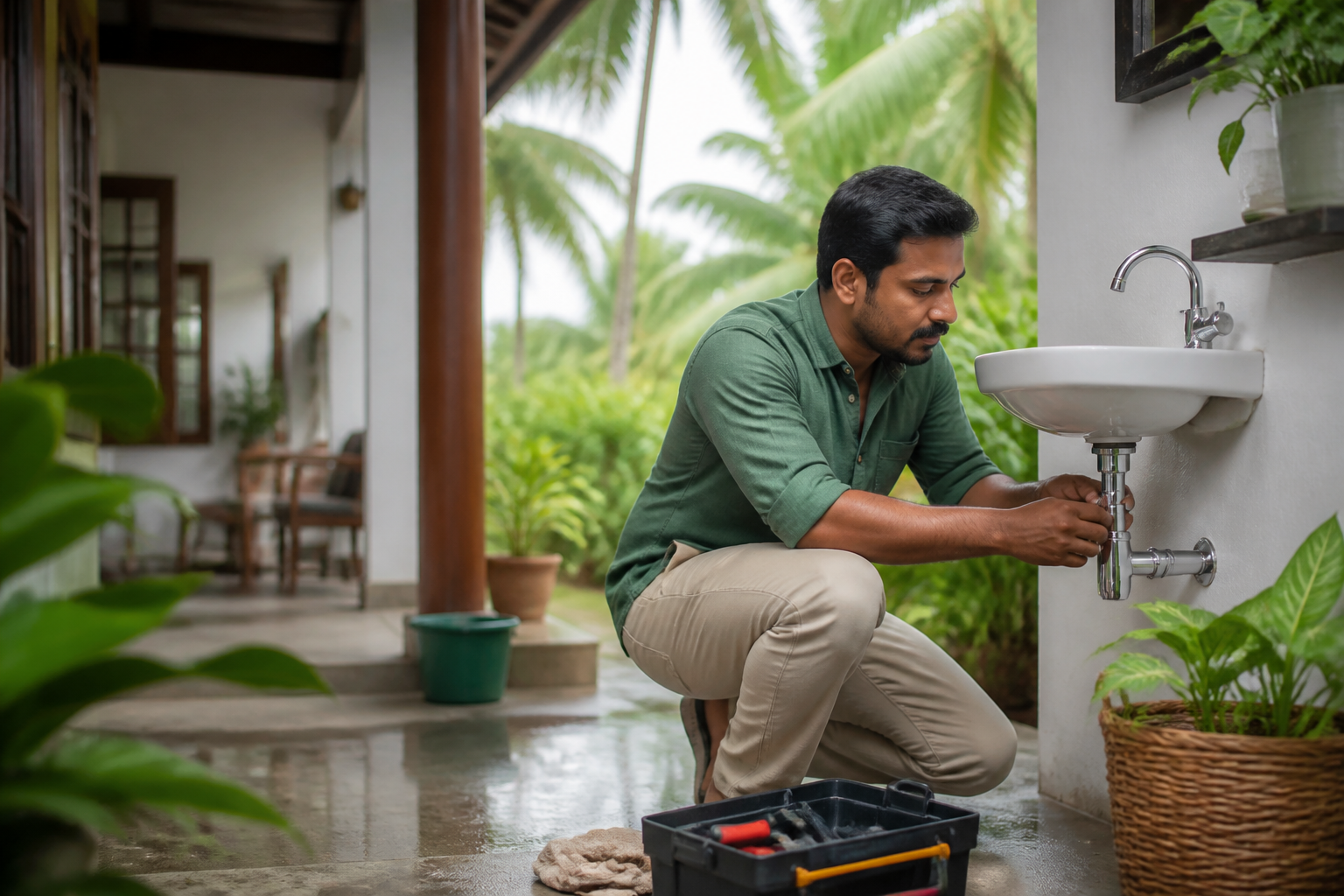
If a tap is dripping, a drain is slow, or a toilet is running continuously, the safest first step is to isolate the problem, stop unnecessary water flow, and check for simple causes like loose fittings, a blocked aerator, or a trapped hair clog. Many common plumbing issues can be handled with basic cleaning and observation, but leaks inside walls, recurring blockages, low pressure across the house, or any sign of sewage backup should be handled by a qualified plumber.
Start with a calm, safe inspection
Before touching anything, turn off the tap or fixture involved. If water is leaking actively, shut the nearest isolation valve. For a major leak, switch off the main water supply. Keep a bucket, cloth, and flashlight ready. In apartments and villas, it helps to know where the main valve and the overhead tank line are located.
For homes in India, plumbing issues often show up after monsoon moisture, hard-water scaling, pump problems, or wear in older PVC and CP fittings. In small businesses such as shops, salons, cafés, or guesthouses, frequent use can make minor issues appear faster, so early troubleshooting saves time and disruption.
Common plumbing problems and safe first checks
| Problem | Likely simple cause | Safe first step | When to stop and call a professional |
|---|---|---|---|
| Dripping tap | Worn washer, loose cartridge, mineral deposits | Close the valve, clean the aerator, tighten visible parts gently | Water still drips after cleaning or the fitting is cracked |
| Slow drain | Hair, soap scum, grease, food residue | Remove visible debris, flush with warm water, use a plunger carefully | Multiple drains are slow or there is a foul smell from several outlets |
| Running toilet | Faulty flapper, float issue, chain misalignment | Open tank lid gently, check float level and chain slack | Tank parts are damaged, water keeps flowing, or tank has visible cracks |
| Low water pressure | Clogged aerator, partially closed valve, tank/pump issue | Clean fixture screens and confirm valves are fully open | Low pressure affects the entire property or pump cycling is abnormal |
| Water stains or damp patches | Hidden leak, condensation, roof seepage near pipes | Dry the area and monitor for return | Patch grows, plaster softens, or the leak source is inside a wall or slab |
Practical checklist for safe troubleshooting
- Shut off water first if the leak is active or spreading.
- Look for the simplest cause before opening fittings: loose valve, clogged aerator, blocked trap, or incorrect float position.
- Use gentle tools like a bucket, cloth, plunger, and flashlight.
- Keep electrical points dry near sinks, water heaters, pumps, and utility areas.
- Note the pattern: one fixture or multiple fixtures, constant or occasional, cold or hot water line, upstairs or downstairs.
- Take photos of stains, leaks, and damaged parts for easier follow-up service.
- Test one change at a time so you can tell what actually solved the issue.
Simple fixes you can try without risk
1) Dripping taps
Many drips come from worn washers or mineral deposits in the aerator. After closing the water supply to that tap, unscrew the aerator and rinse out visible scale. If the tap still leaks, the internal cartridge or washer may need replacement. If you are not comfortable opening the tap body, stop there and get help.
2) Slow sink or basin drains
Start by removing visible hair, soap buildup, or food scraps from the drain opening and trap area if accessible. A plunger can help dislodge light blockages. Avoid pouring harsh chemicals repeatedly, especially in older pipes, because they can damage fittings and create unsafe fumes.
3) Running toilet
Lift the tank lid carefully and check whether the chain is tangled, the float is set too high, or the flapper is not sealing. A small adjustment may solve the issue. If the flush valve looks worn, or the water level keeps rising, a plumber should inspect it.
4) Low pressure at one fixture
If only one tap or shower has low pressure, remove and clean the aerator or showerhead. Sediment from overhead tanks or hard-water scaling can reduce flow. If all fixtures are affected, the issue may be in the supply line, pressure regulator, pump, or municipal connection.
Common mistakes to avoid
- Do not overtighten fittings. This can crack plastic parts and damage threads.
- Do not ignore recurring leaks. A small drip can hide bigger wear or concealed seepage.
- Do not mix strong drain chemicals. This can create harmful reactions and damage pipes.
- Do not force stuck valves. Old valves may snap and cause a larger leak.
- Do not open wall sections or slabs casually. Hidden plumbing needs proper inspection tools and repair methods.
When to call a qualified professional
Call a qualified plumber or service team if you notice any of these:
- Water leaking from walls, ceilings, floors, or near electrical points
- Sewage smell, backflow, or repeated toilet blockage
- Sudden drop in water pressure across the home or property
- Continuous pump running, tank overflow, or unusual pump noise
- Corroded pipes, broken valves, cracked tanks, or damaged fittings
- Any issue involving gas water heaters, major pipe replacement, or structural cutting
For electrical, gas, structural, or major repair risks, do not attempt a DIY fix. A qualified professional can diagnose the root cause safely and prevent secondary damage. If you need organized support for homes, rentals, or commercial spaces, you can Ask Karyasthan for help or explore Managed services for ongoing property support.
A few India-specific reminders
In many Indian homes, water storage tanks, borewell pumps, municipal supply timing, and monsoon seepage all affect plumbing performance. Check whether the issue happens only during tank refill times or only when multiple taps are used together. In apartments, a problem may be within your unit, the building line, or the common supply, so coordinating with the society office can save time. For rented homes and NRIs managing property remotely, quick photos, clear notes, and timely service coordination help avoid small issues turning into expensive repairs.
FAQ
Can I use a plunger on every drain?
It is usually safe for sinks, basins, and toilets if used correctly. Avoid aggressive plunging on fragile fixtures or if there is already a visible crack or overflow.
Why does my tap drip only at night or after water supply resumes?
This can happen due to pressure changes, trapped air, or worn internal parts. If it repeats often, the faucet may need servicing.
Is a small damp patch on the wall serious?
It can be. Small patches sometimes signal a hidden leak. Watch whether the area grows, softens, or develops a smell, and get it checked promptly.
Should I use chemical drain cleaners?
Use caution. Occasional use may not solve the real blockage and can harm old pipes or fittings. Mechanical cleaning or professional inspection is often safer.
What should I do if the toilet overflows?
Stop the water supply to the toilet immediately, avoid flushing again, and clean up safely. If the blockage remains, call a professional.
If you want reliable support for ongoing household or property maintenance, Contact the team to discuss the right service plan. A quick response now can prevent bigger plumbing trouble later.


0 Comment