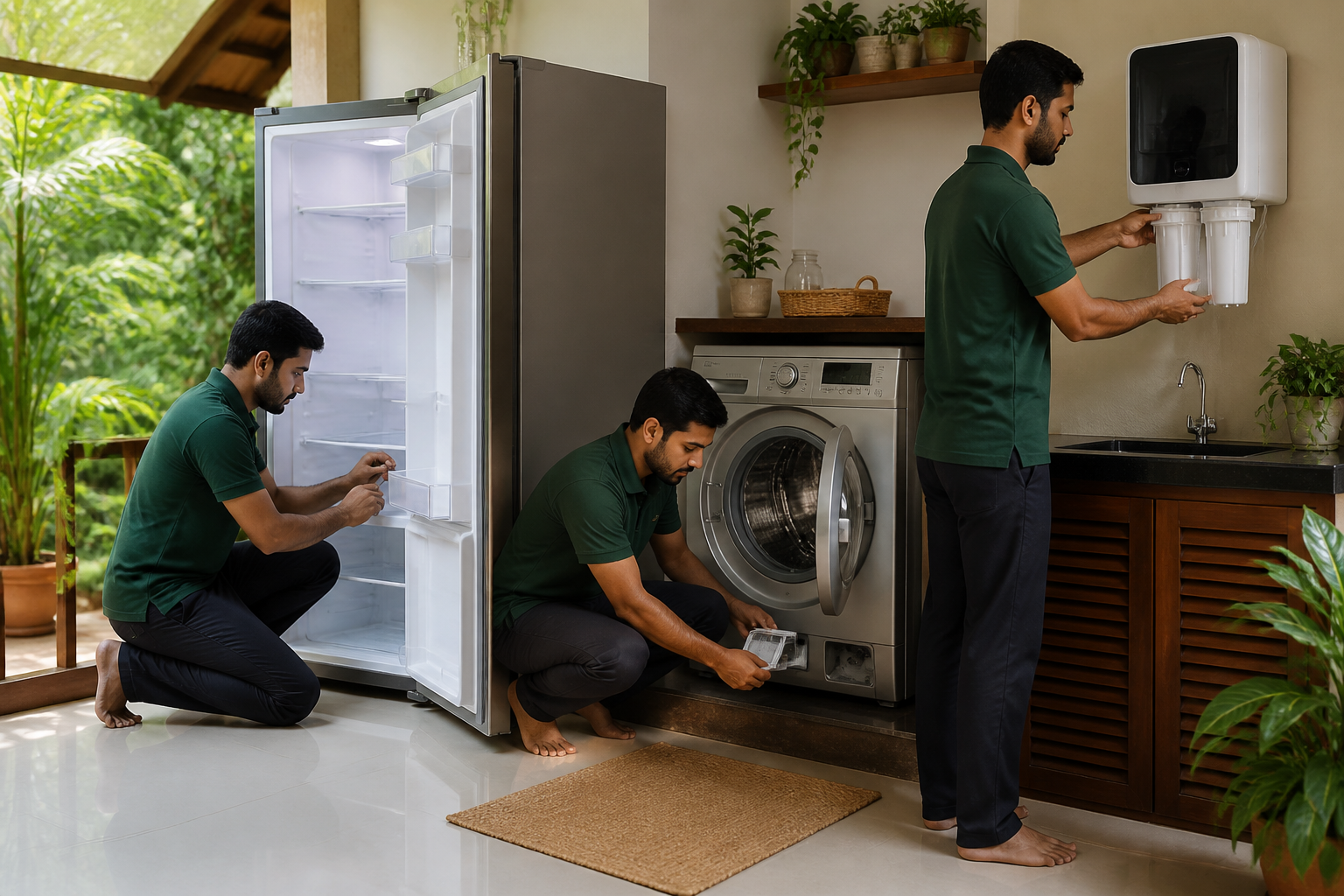
The best way to avoid breakdowns is simple: clean these appliances regularly, use them correctly, and get small issues checked early. For a refrigerator, washing machine and water purifier, routine maintenance saves time, reduces stress, and helps the appliance last longer.
If you manage a family home, an NRI property, a rental unit, or a small business pantry, a basic upkeep plan makes a big difference. Below is a practical guide you can follow at home, along with clear signs that it is time to call a qualified professional.
What regular maintenance should cover
Each appliance has a few key parts that need attention. You do not need to open up the machine or attempt risky repairs. Focus on cleaning, placement, usage habits, and early checks.
| Appliance | What to check | How often |
|---|---|---|
| Refrigerator | Door seal, temperature setting, rear ventilation, drip tray, cleanliness | Weekly to monthly |
| Washing machine | Drum cleanliness, filter, hoses, detergent use, balance, drainage | Weekly to monthly |
| Water purifier | Indicator lights, filter life, storage tank hygiene, taste and flow rate | Weekly to quarterly |
Refrigerator maintenance: keep cooling efficient
A refrigerator works best when it has enough airflow and the door seals properly. If cooling feels uneven or the appliance runs too often, start with the basics.
Simple care steps
- Wipe spills quickly so smells and stains do not build up.
- Check that the door closes fully and the gasket is clean.
- Do not overload shelves or block the cooling vents inside.
- Leave space around the fridge for proper ventilation.
- Set the temperature according to the user manual or normal household use.
- Defrost and clean it as recommended for your model.
If you notice water leakage, unusual noise, or poor cooling even after cleaning, that may point to a technical issue. For compressor, thermostat, or gas-related concerns, use a qualified technician. Avoid trying to open sealed cooling parts yourself.
Washing machine maintenance: protect drum and drainage
Most washing machine issues start with overloaded loads, too much detergent, or lint and residue inside the drum and filter. Good habits keep the machine cleaner and extend its life.
Simple care steps
- Use the right amount of detergent; more soap does not mean cleaner clothes.
- Clean the lint filter and detergent tray regularly.
- Do not overload the drum.
- Keep the machine level so it does not shake too much during spin cycles.
- Check hoses and inlet points for wear, leaks, or loose fittings.
- Run a cleaning cycle if your machine supports it.
If the machine is making loud grinding sounds, is not draining, or shows repeated error codes, do not force it. Electrical faults, motor issues, and internal drainage problems should be checked by a trained professional.
Water purifier maintenance: keep water clean and flow steady
Water purifiers need attention because their job is directly tied to household health and daily use. Clean water storage, timely filter changes, and normal flow rate are the basics to watch.
Simple care steps
- Check the purifier indicator, if your model has one.
- Keep the outer body clean and dry.
- Make sure the tap area and storage tank remain hygienic.
- Observe any change in taste, smell, or water flow.
- Replace filters as per the manufacturer’s schedule or service guidance.
- Inspect for visible leaks around the unit.
Do not attempt internal electrical or filter system repairs unless you are trained. If the purifier is leaking, not switching on, or producing water with a noticeable change in quality, call a qualified service person. For households looking for dependable help, you can Ask Karyasthan for support or explore Managed services for ongoing upkeep.
Practical maintenance checklist
Use this checklist as a monthly routine for most homes and small properties:
- Refrigerator: Clean shelves, check door seal, clear vents, and confirm cooling.
- Washing machine: Clean filter, review hoses, avoid overload, and check for vibration.
- Water purifier: Check indicator, review water taste and flow, and clean exterior surfaces.
- Power and placement: Keep appliances on stable surfaces and away from moisture where possible.
- Service records: Note the last cleaning, filter change, and technician visit date.
Common mistakes to avoid
Many appliance problems happen because of small but repeated mistakes. Avoid these habits:
- Ignoring early warning signs like noise, leaks, or weak performance.
- Using too much detergent in the washing machine.
- Packing the refrigerator too tightly and blocking airflow.
- Delaying purifier filter changes beyond the recommended interval.
- Trying to open electrical panels, sealed cooling systems, or internal water purifier parts without training.
- Waiting until a complete breakdown instead of arranging a simple inspection.
When to call a qualified professional
Some problems are best handled by a trained technician. Call a qualified professional if you notice any of the following:
- Fridge not cooling properly, frequent cycling, or compressor noise.
- Washing machine burning smell, electrical fault, repeated error codes, or drum/motor trouble.
- Water purifier leakage, unusual taste, poor flow after filter change, or power issues.
- Any sign of sparking, overheating, water near electrical parts, or a tripping circuit.
For homes that need scheduled follow-up, property oversight, or a dependable local hand for recurring maintenance, you can also Contact the team to discuss a service plan.
Helpful habits for NRIs, landlords and busy families
If you are not always at the property, simple tracking helps avoid avoidable damage. Ask someone to send monthly photos of the appliances, note any odd sounds or leaks, and record service dates. For rental homes, it is useful to keep a basic appliance log with purchase year, warranty details, and last service date. That makes tenant move-ins, inspections, and repairs much easier to manage.
FAQ
How often should I service a refrigerator, washing machine and water purifier?
Light cleaning can be weekly or monthly, while professional servicing depends on the model, usage, and condition. Follow the manufacturer’s guidance and arrange checks sooner if performance changes.
Can I clean all three appliances myself?
You can handle surface cleaning, visible dust, and basic user-level care. Avoid opening sealed, electrical, or internal components unless you are qualified.
What is the biggest sign that maintenance is overdue?
Reduced performance is the clearest sign: weak cooling, poor wash results, slow purification, unusual noise, leakage, or rising power use can all indicate a problem.
Is it worth keeping a service record?
Yes. A simple note of service dates, filter changes, and repair visits helps you spot patterns and plan ahead.
Good appliance care is less about complicated fixes and more about consistent attention. If you want a steady hand for inspection, cleaning coordination, or regular upkeep, ask Karyasthan and onboard the right support for your home or property.


0 Comment